Skip to content

Program Management

Program Management Management

Setting the cadence for complex initiatives

Program Management is the engine that brings strategy to life. While Portfolio Management sets the course, Program Management provides the necessary drive.
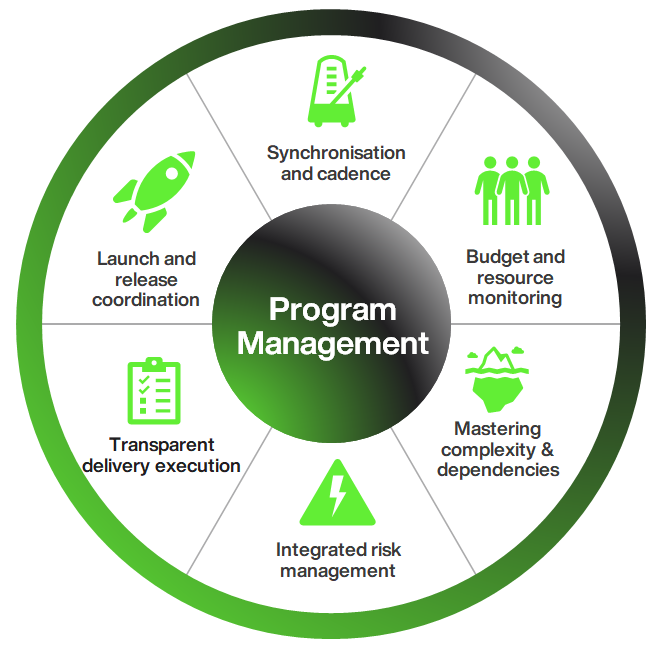
We identify dependencies and bottlenecks, thereby determining the critical path and resolving blockers. By synchronizing dependencies and monitoring budgets, we ensure that pure output is transformed into goal-oriented business outcome.

  • coordinated

    Seamless team synchronization

    We establish a common "heartbeat" or cadence so that IT, business units, and operations work together toward one goal – integrated rather than just in parallel.

  • where are dependencies?

    Active dependency management

    We make invisible blockages between teams visible and resolve them before they jeopardize the critical path and the go-live.

  • pick up speed

    Increased throughput

    By focusing on eliminating obstacles and reducing handover losses, we increase the overall productivity of your programs.

  • Controlling

    Budget & resource monitoring

    We create transparency over budget consumption and capacity utilization. We use forward-looking indicators to identify budget overruns and resource bottlenecks early.

  • perfect fit

    Integrated quality & orchestration

    We ensure that all outputs are designed for integration from the start. This creates an optimal orchestration of all projects within the program.

  • focus on program management

    Operational relief for leadership

    Through clear escalation paths and operational self-steering of the teams, program managers gain time to focus on content and strategic design.

Program-Management_EN

Program Management, when does it add value?

Interface conflicts: When teams wait for each other technically or functionally,
causing delays to compound across the entire project.

Integration backlog: When individual components are completed, but the
consolidation into an overall system fails repeatedly or occurs too late.

Lack of delivery transparency: When work is proceeding at high pressure, but there is no binding statement on when the integrated product will be ready and what budget is required.

Inconsistent cadence: When teams work at different speeds and cycles, leading to permanent friction losses in coordination.

Lack of strategic alignment: When teams work on conflicting priorities and the focus on value-driving core functions is lost.

Program leadership overload: When those responsible for the program are drowning in operational "firefighting" and have no time left to steer the results.

Download factsheet

Still have questions?

Marco Stehlin is there for you.